

Recommerce has been part of eBay since the very beginning — creating economic opportunity, giving products a second life, and helping people find value in things that still have more to give.
What’s exciting today is just how mainstream recommerce has become. People are thinking differently about what they buy and how they shop. Consumers want value, relevance, trust, and the thrill of finding something meaningful. That could be a pre-loved jacket, a refurbished laptop, a rare trading card, or a secondhand part to give their car the upgrade it needs.
And on eBay, that shift is already happening: since 2024, pre-loved and refurbished goods have represented more than 40% of our GMV.
It’s a reflection of what sets eBay apart.
Recommerce touches nearly every corner of our marketplace, from fashion, sneakers, watches, and handbags to trading cards, collectibles, motor parts and accessories, and refurbished electronics — and even more. That breadth gives us a unique view into how people are changing the way they shop across different passions, price points, and everyday needs.
And it is all powered by our everyday sellers. This year, 85% of eBay sellers surveyed said they source secondhand inventory from their own personal belongings. Nearly 30% said selling secondhand helps them earn extra income.
As this report shows, more people are continuing to embrace recommerce for the value, selection, and economic opportunity it creates.
eBay has helped lead this movement for more than 30 years, and I believe there’s a lot more momentum ahead.

From mainstream to mainstay
If our 2025 Recommerce Report showed that recommerce had firmly entered the mainstream, this year’s data shows how deeply it is becoming embedded in everyday life. Beyond saving money, buyers are weaving recommerce into how they manage household budgets, shop across more categories, connect with sellers and communities, and discover products across the world. And while affordability remains a foundational driver, trust, sustainability, and more interactive shopping experiences are helping define the next stage of recommerce’s growth.
Our 2026 Recommerce Report draws on two surveys conducted online by Bounce Insights, a leading agile research platform, across several markets: one focused on secondhand shoppers (10,523 total) and one on eBay sellers (1,707 total). Together, they show how consumers are integrating recommerce into daily life and how sellers are responding to that evolving demand.
In 2026, 47% of consumers surveyed said they buy secondhand goods at least monthly, up from 35% in 2025.
-
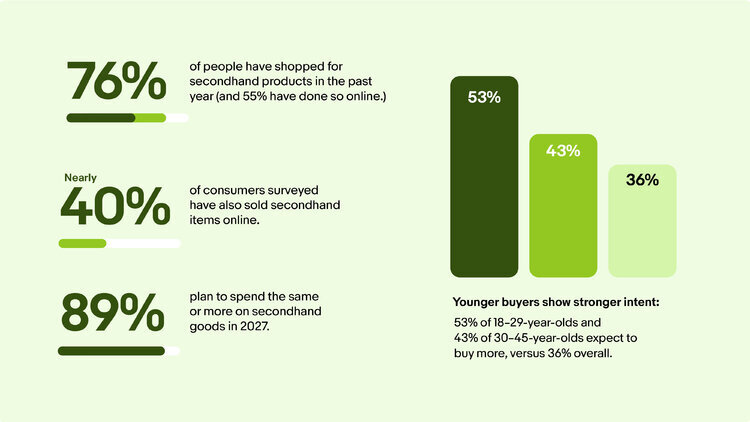
76% of people have shopped for secondhand products in the past year (and 55% have done so online).
-
89% plan to spend the same or more on secondhand goods in 2027.
-
Younger buyers show stronger intent: 53% of 18–29-year-olds and 43% of 30–45-year-olds expect to buy more secondhand products, versus 36% overall.
-
Nearly 40% of consumers surveyed have also sold secondhand items online.
-
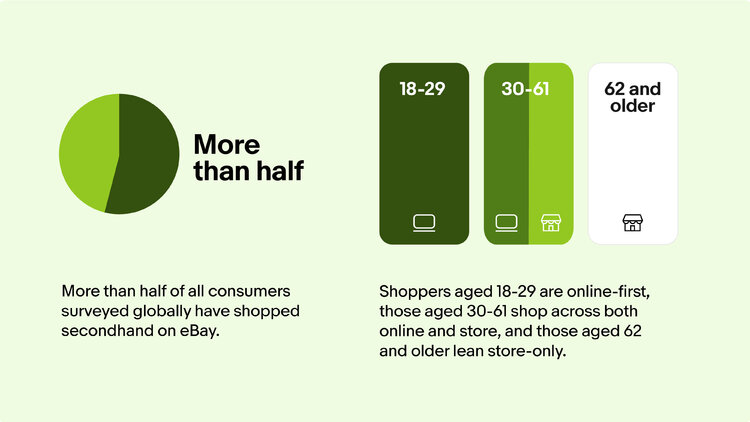
Channel preferences shift as people enter different life stages and as technology evolves.
-
Shoppers aged 18-29 are online-first, those aged 30-61 shop across both online and store, and those aged 62 and older lean store-only.
-
More than half of all consumers surveyed globally have shopped secondhand on eBay.
-
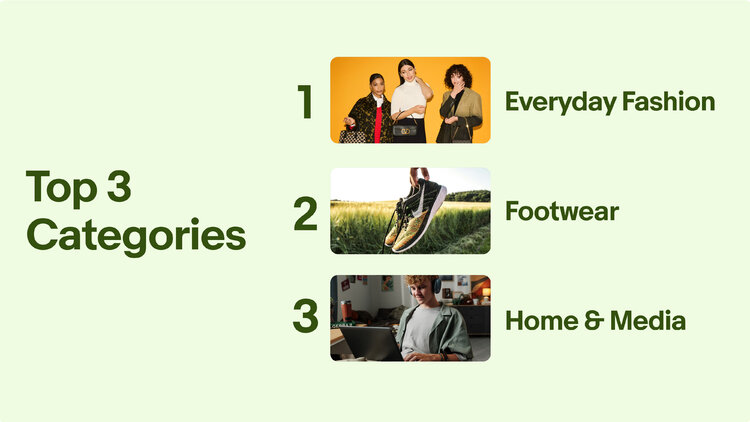
The top three categories across the board are everyday fashion, footwear, and home and media, with collectibles also emerging as a major focus.
-
Younger consumers buy secondhand across a broader range of categories, with the average Gen Z buyer shopping across four categories. This suggests they see it as a mainstream choice rather than something they turn to for select categories, like pre-loved fashion.
-
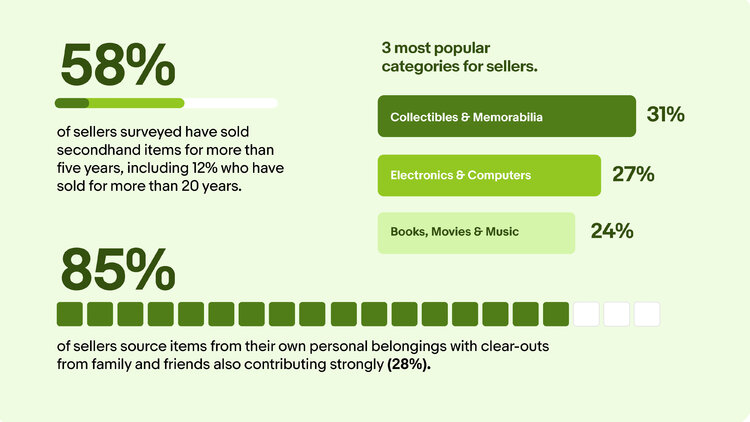
58% of sellers surveyed have sold secondhand items for more than five years, including 12% who have sold for more than 20 years.
-
Collectibles & Memorabilia (31%), Electronics & Computers (27%), and Books, Movies & Music (24%) are the three most popular categories for sellers.
-
85% of sellers source items from their own personal belongings with clear-outs from family and friends also contributing strongly (28%).

The household economics of secondhand
As price and cost-of-living pressures persist, consumers are looking for more ways to make their money go further. Recommerce is increasingly part of that equation — helping people save on what they buy and unlock value from what they sell.
About this chart
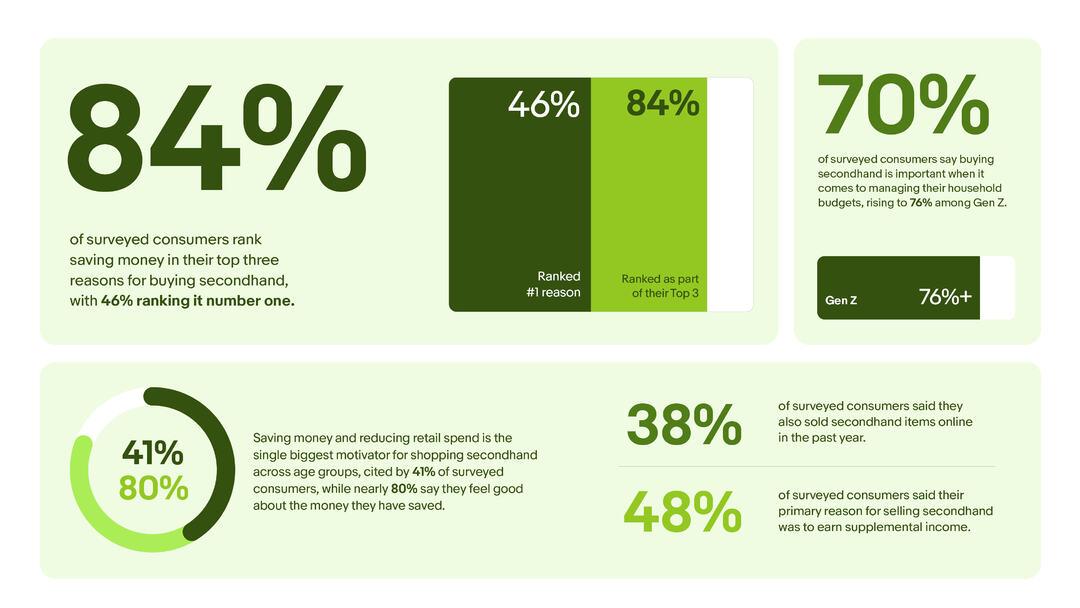
Among surveyed consumers, 84% rank saving money among their top three reasons for buying secondhand, and 46% rank it No. 1. The top three reasons are saving money or affording brands they wouldn’t buy new; sustainability, including reducing waste, extending product life and avoiding fast fashion; and finding rare or unique items, including collectibles, vintage goods and products no longer sold new. Saving money and reducing retail spending is the biggest motivator across age groups, cited by 41%, while nearly 80% feel good about the money they’ve saved. Seventy percent say secondhand helps manage household budgets, rising to 76% among Gen Z. In addition, 38% sold secondhand items online in the past year, and 48% primarily did so to earn supplemental income.
Trust is the price of entry
Consumers have embraced the value of recommerce, and trust is emerging as an increasingly important driver of its next phase of growth. For shoppers still on the sidelines, greater confidence in product condition, listing accuracy, authenticity, buyer protection, and sellers themselves could help turn consideration into purchase.
About this chart
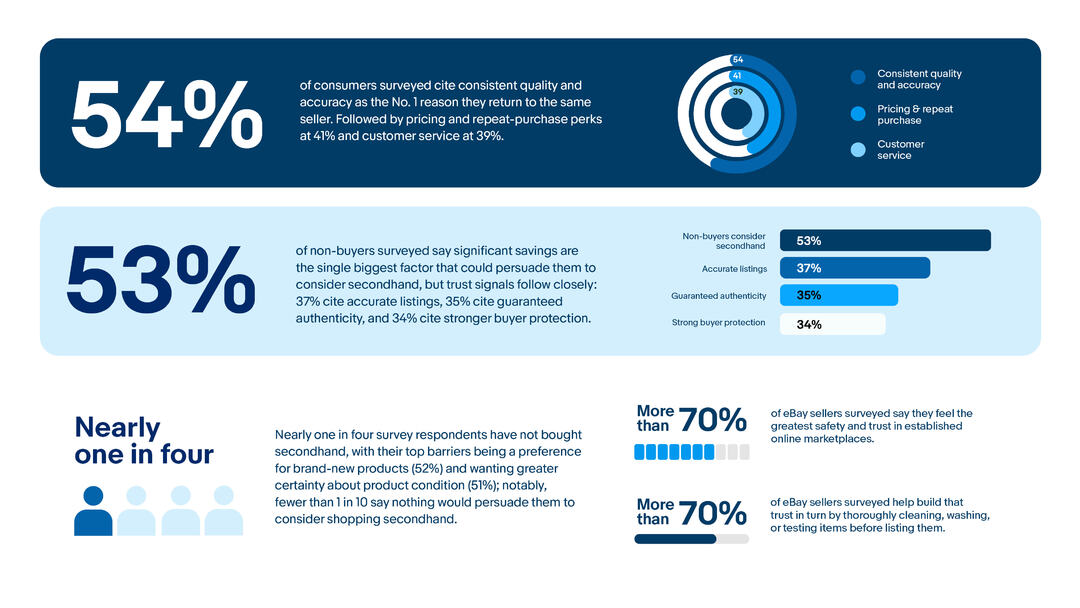
Among surveyed consumers, 54% cite consistent quality and accuracy as the No. 1 reason they return to the same seller, followed by pricing and repeat-purchase perks at 41% and customer service at 39%. Among non-buyers, 53% say significant savings could persuade them to consider secondhand, followed by accurate listings (37%), guaranteed authenticity (35%) and strong buyer protection (34%). Nearly one in four respondents have not bought secondhand; their top barriers are a preference for brand-new products (52%) and wanting greater certainty about product condition (51%), while fewer than 1 in 10 say nothing would persuade them. More than 70% of surveyed eBay sellers feel the greatest safety and trust in established online marketplaces, and more than 70% build trust by thoroughly cleaning, washing, or testing items before listing them.
eBay earns credibility by giving buyers added confidence that eligible items are authenticated before delivery, while protecting sellers through verification of returned items.
Eligible purchases go to one of our authentication centers, where a professional authenticator confirms the item is genuine and matches its listing. If it can’t be verified or doesn’t match, it’s returned to the seller. The buyer receives a refund. Eligible returns go back through authentication to verify authenticity and condition before being returned.
More than 20 million cumulative items have been processed through eBay’s authentication centers across the U.S., U.K., Australia, Canada, Germany, and Japan.
Buyers can get refunded if an item doesn’t arrive, arrives damaged, or doesn’t match the listing. For covered purchases (which includes nearly all products), the protection is automatic and includes the purchase price and original shipping at no extra cost.

Second life, lasting impact
Sustainability remains a defining aspect of recommerce, but its importance is especially pronounced among younger consumers. While shoppers broadly recognize the environmental benefits of buying secondhand, younger buyers are more willing to pay for more sustainable choices. eBay sellers see that impact in practical terms, with the top three most important sustainability benefits to them being extending product life, reducing waste, and keeping more items out of landfills.
About this chart
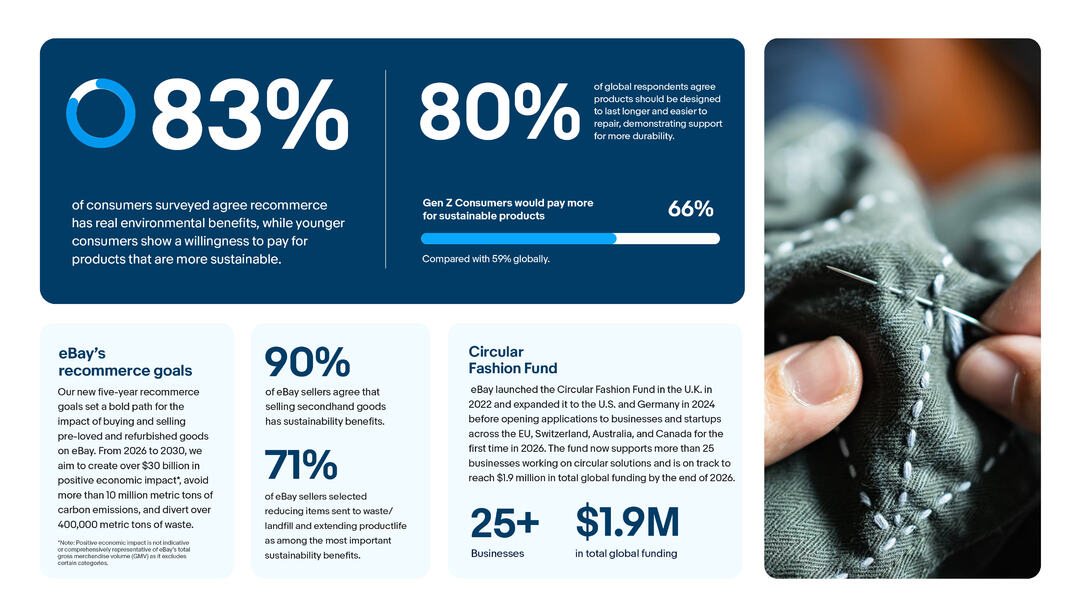
Among surveyed consumers, 83% say recommerce has environmental benefits, 80% say products should be designed to last longer and be easier to repair, and 66% of Gen Z would pay more for sustainable products, versus 59% globally. Among eBay sellers, 90% see sustainability benefits in selling secondhand, and 71% cite reducing landfill waste and extending product life as key benefits. From 2026 to 2030, eBay aims to create more than $30 billion in positive economic impact, avoid more than 10 million metric tons of carbon emissions and divert more than 400,000 metric tons of waste.* The Circular Fashion Fund, launched in the U.K. in 2022 and expanded to the U.S. and Germany in 2024 and the EU, Switzerland, Australia, and Canada in 2026, now supports 25+ businesses and is on track for $1.9 million in global funding by year-end 2026.
The human side of recommerce is going live
As commerce becomes more automated and transactional, buyers still value the human side of shopping. Yet nearly half say they have never felt personally connected to a seller. Live shopping offers a way to close that gap by bringing conversation, interaction, and community into the transaction — making recommerce more social and personal.
About this chart
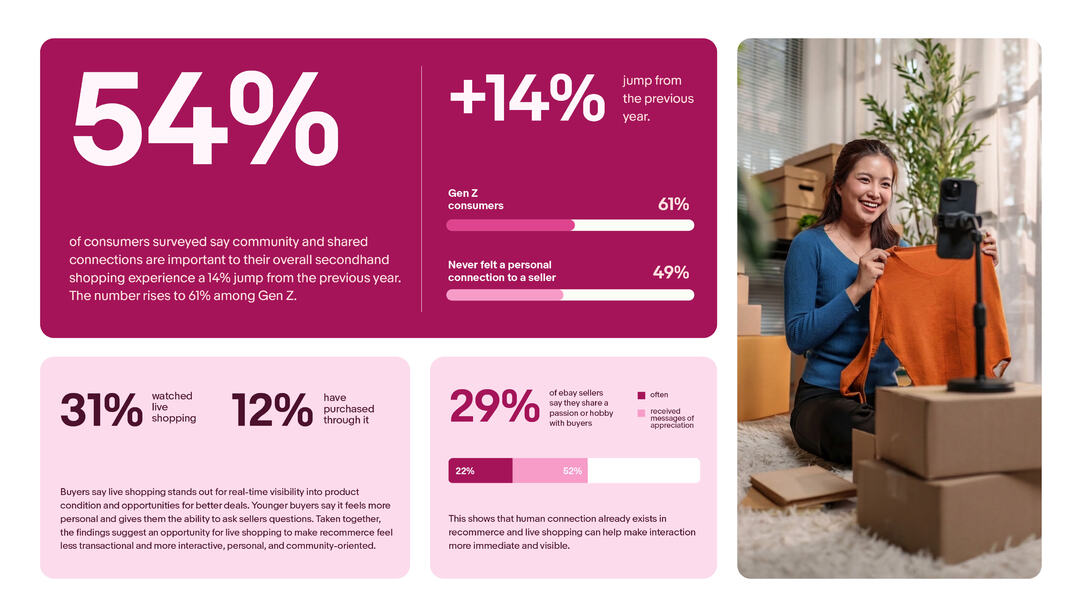
Among surveyed consumers, 54% say community and shared connections are important to their secondhand shopping experience, up 14% from the previous year and rising to 61% among Gen Z, yet 49% have never felt a personal connection to a seller. Thirty-one percent have watched live shopping and 12% have purchased through it, with younger buyers particularly valuing real-time product visibility, deals and interaction with sellers. Among eBay sellers, 29% say they share a passion or hobby with buyers, 22% say this happens often, and 52% have received messages of appreciation—showing an opportunity for live commerce to make recommerce more personal, interactive and community-oriented.

Cross-border recommerce
Millions of sellers choose eBay to reach buyers around the world and create economic opportunity through the items they sell. At the same time, buyers come to eBay in search of unique inventory and better value — two of the core benefits recommerce can unlock. But realizing that opportunity means reducing the friction of international trade, from delivery costs and returns for buyers to logistics, customs, taxes, and cross-border returns for sellers.
About this chart
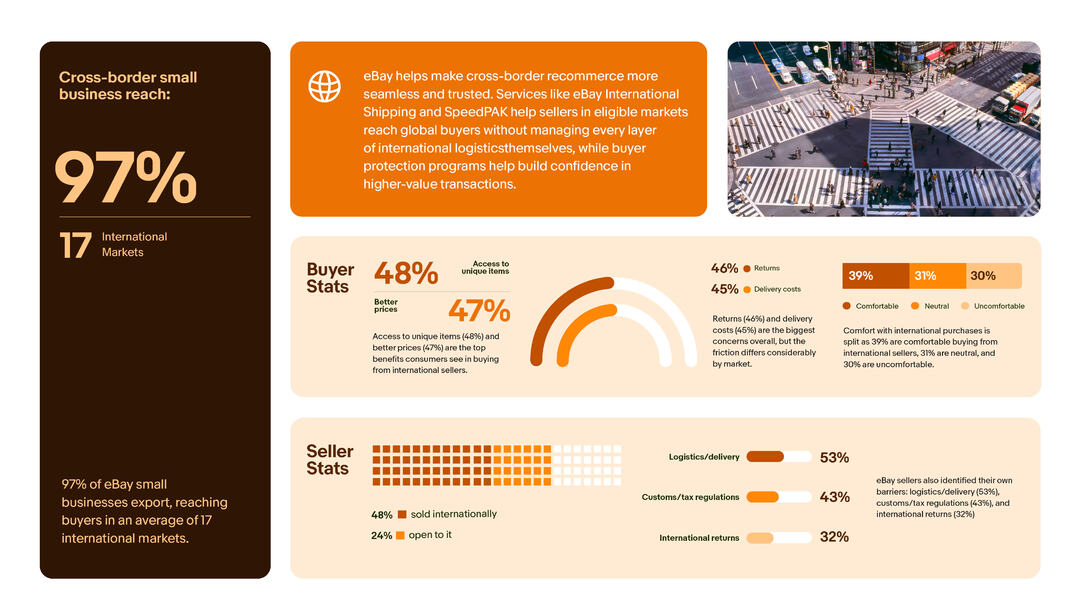
97% of eBay small businesses export, reaching buyers in an average of 17 international markets. eBay International Shipping and SpeedPAK help eligible sellers reach global buyers while buyer protection programs support confidence in higher-value transactions. Consumers cite access to unique items (48%) and better prices (47%) as the top benefits of buying internationally, while returns (46%) and delivery costs (45%) are the biggest concerns. 39% percent feel comfortable buying from international sellers, 31% are neutral and 30% are uncomfortable. Among surveyed eBay sellers, 48% have sold a secondhand item internationally and another 24% are open to it; their top barriers are logistics and delivery (53%), customs and tax regulations (43%) and international returns (32%).
Across markets, recommerce is increasingly global, but how consumers participate — from what they buy to how they shop and what they value — remains distinctly local. Click to see how consumers around the world participate in recommerce.

Australia: Durability first
Older Australians are putting longevity at the center of secondhand value. 96% of Australians aged 62 and older express a strong preference for product durability.

Austria: Recommerce goes live
15% of Gen Z consumers surveyed have both watched a live shopping event and made a purchase, compared with just 1% of 46–61-year-olds, highlighting live commerce as an especially young way to shop secondhand in Austria.

France: The rise of the pre-Loved present
France is the fastest-growing secondhand gifting market. 35% of French consumers are likely to buy more secondhand gifts this year than last, the highest of all markets.

Germany: Sustainability has tangible value
84% of German respondents recognize the sustainability benefits of buying secondhand. German sellers also stand out for the care they put into items before selling: 76% thoroughly clean, wash, or test secondhand items before listing them.

Italy: Built to last
Italian consumers are looking beyond a product’s first life, prioritizing goods designed to last and be repaired. 89% say products should be durable, while 85% say they should be easier to repair.

Japan: Cross-border caution
Japanese sellers also take a different approach to sourcing: 58% visit physical secondhand shops and markets to find inventory, compared with a global seller landscape dominated by personal belongings, from which 85% of sellers source.

Poland: Digital-first recommerce
Younger Polish shoppers are taking a digital-first approach to recommerce. 55% of Gen Z buyers surveyed shop secondhand exclusively online, compared with 32% overall.

Spain: Tech leads the mix
Secondhand electronics stands out as a particularly important part of the Spanish recommerce mix. 38% purchase secondhand electronics, making it the most commonly purchased category, followed by everyday fashion at 36%.

U.K.: Secondhand giving
47% of 18–45-year-olds are willing to gift pre-loved items, compared with just 15% of those aged 62+. The generational divide shows younger U.K. consumers are helping normalize secondhand gifting.

U.S.: Next wave of growth
Younger Americans appear poised to drive the next wave of recommerce growth. 60% of 18–29-year-olds plan to increase their secondhand purchases next year, compared with 41% overall in the U.S.
Young consumers are showing what comes next
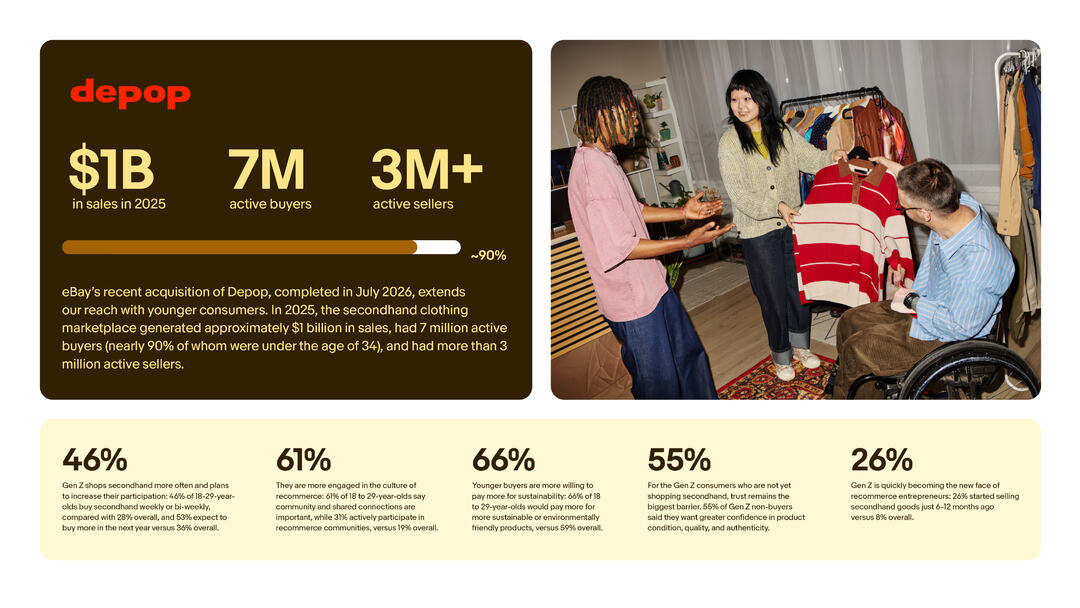
Secondhand used to feel second best. Young consumers have changed that narrative, shopping secondhand more often and across more categories.
About this chart
eBay’s acquisition of Depop, completed in July 2026, expands its reach with younger consumers. In 2025, Depop generated about $1 billion in sales, with 7 million active buyers — nearly 90% under age 34 — and more than 3 million active sellers. Among 18–29-year-olds, 46% buy secondhand weekly or biweekly versus 28% overall, and 53% expect to buy more next year versus 36% overall; 61% value community and shared connections, while 31% participate in recommerce communities versus 19% overall; and 66% would pay more for sustainable products versus 59% overall. For Gen Z non-buyers, trust remains the biggest barrier, with 55% wanting greater confidence in product condition, quality and authenticity. Twenty-six percent of Gen Z recommerce entrepreneurs began selling secondhand 6–12 months ago versus 8% overall, and 17% say resale helps cover essential bills versus 6% overall. Nearly 70% of Gen Z eBay sellers say more than half of what they sell is secondhand, led by electronics, collectibles and video games.

As more consumers turn to recommerce for affordability, more entrepreneurs build businesses around resale, and more products find a second life, thoughtful public policy can help this growing economy thrive. Policymakers can support continued growth by modernizing rules to reflect how recommerce works today, while protecting consumers and keeping goods in circulation longer.
Secondhand goods are not the same as newly manufactured products. Rules designed for the latter are not always relevant for goods that have already been used or changed hands multiple times. Governments should recognize secondhand goods as a distinct category across regulatory frameworks, with practical and proportionate requirements that reflect the unique characteristics of previously owned products. This can maintain strong consumer protections while avoiding requirements that are impractical or impossible to meet when an item is resold.
The goal of regulatory modernization should be more effective enforcement, not more paperwork. Better data and digital tools can help governments pool resources in the most crucial areas. Risk-based approaches should direct greater scrutiny toward higher-risk goods and transactions while reducing unnecessary burdens on low-risk secondhand commerce. This is particularly important for individuals and small businesses, where excessive compliance costs can create barriers to legitimate resale.
Tax policy should recognize the difference between a product’s initial sale and its resale. Governments should consider approaches that avoid repeatedly taxing the same product as it moves through the secondary market. Tax policy that better reflects resale can help consumers make their money go further while supporting reuse and small businesses.
Making products easier to fix and giving people the ability to fix them is crucial to a strong secondhand economy. Governments should support meaningful Right to Repair policies that make it easier and more affordable to keep products in use, including by offering access to spare parts, tools and repair information, and removing unnecessary barriers for individuals to repair their goods. Products that can be fixed are more likely to remain in use, be refurbished, and ultimately enter the secondhand market instead of the landfill.